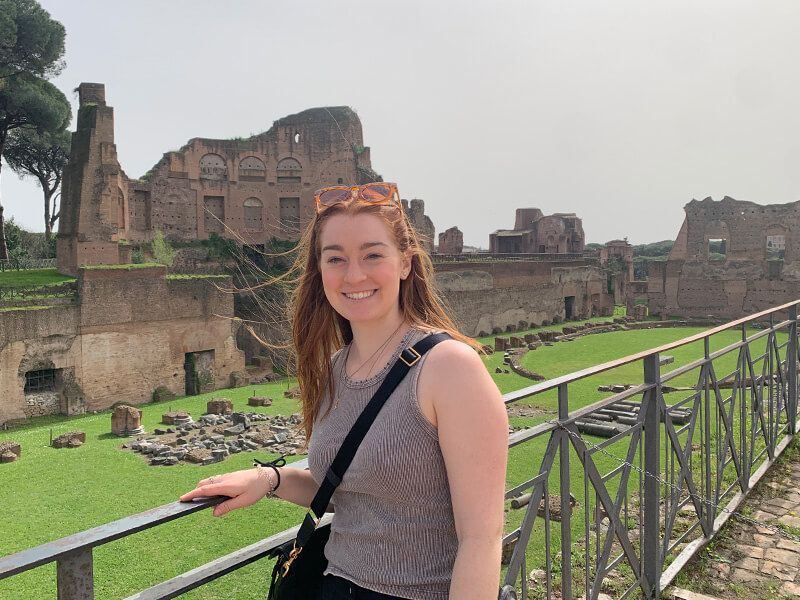
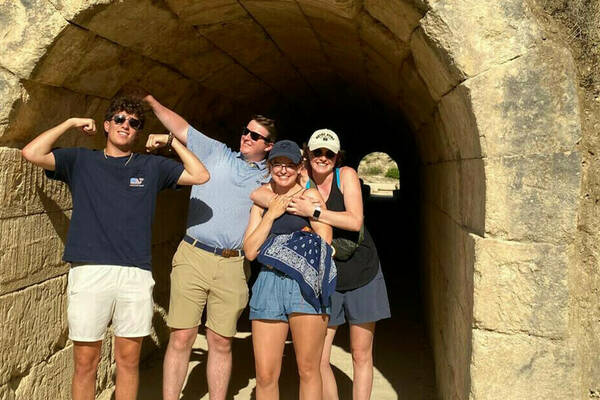
Classics majors are encouraged to study abroad in order to gain first-hand knowledge of Mediterranean culture and material artifacts. As many of our majors can attest, there’s no substitute for seeing the sites for yourself! Most students study abroad during their junior year.
Course credits are applied to your ND transcript and students can maintain any financial aid package they currently hold. Students must consult the director of undergraduate studies very early in the semester before they intend to go abroad.
Rome, Italy
The Intercollegiate Center for Classical Studies (ICCS) is the premier study abroad program for Classics majors. The heart of the curriculum is The Ancient City, a double-credit course required of all Centristi. This interdisciplinary class tackles Rome’s art, history, archaeology, topography, social make-up, and much more.
Classics students can also pursue independent research as Rome International Scholars at Notre Dame’s new Rome center near the Colosseum. Students accepted to this semester-long program will pursue an independent research project based in Rome with Notre Dame faculty supervision. Students will take courses at local universities, live with Roman families, and carry out internships with local organizations.
Athens, Greece
Majors with a particular interest in ancient Greek studies have a special opportunity to study abroad in Athens for a semester on the College Year in Athens (CYA) program. They live and study with students from other top colleges and universities. Extended trips to important archaeological sites, such as Delphi and Mycenae, are part of the curriculum. Students choose from a wide variety of options, including Latin or Greek language and courses on the history, politics, philosophy, literature, art, and archaeology of ancient Greece.
Study Abroad Spotlight
From Epic Literature to epic travels, Tori had a legendary experience majoring in Classics. Tori went on to the University of Oxford for an MSc in Refugee and Forced Migration Studies:
"I came into Notre Dame never having studied a classical language. I took Greek first semester of freshman year on a whim and loved it. Since then, I’ve had the pleasure of reading the works of Homer, Aeschylus and Plutarch, parts of the New Testament and more incredible works in their original language. "Spring semester of junior year, I studied abroad in Athens and visited the places I had read about. I stood atop the Areopagus and thought of Paul’s speech in Acts of the Apostles. I saw the ruins of where Socrates was sentenced to death in the Athenian Agora and thought of the Apology. I walked around the palace at Mycenae and wondered whether the characters in the Iliad had truly lived there. "Classics came alive for me in Greece, and my study abroad experience was surreal."– Tori Roeck, '14