About
What is Classics?

Classics is the study of ancient Greece and Rome from the Bronze Age, when a distinctive Greek culture first emerged, to the waning of the Roman Empire.
The Department of Classics at Notre Dame provides instruction in the ancient Greek and Latin languages, Greek and Roman literature, and the history, culture, and archaeology of the ancient Mediterranean world.
Students explore that world — from the Greece of Homer to the Athens of Plato, from the Rome of Cicero and Caesar to the Africa of Augustine — in a variety of options for the major and the minor.
A broad survey of the literature, history, and culture of Greece and Rome is provided by the Classical Civilizations Major, which does not require Latin or Greek languages.
The Major in Classics adds close study of those languages. The department is also home to two master’s programs, the M.A. in Classics and the M.A. in Early Christian Studies.
Why study Classics?
To study classics is to understand an influential and compelling aspect of world history and culture.
The literature, history, and culture of ancient Greece and Rome have exercised immeasurable influence on intellectual and artistic imaginations for millennia. Thinkers and writers, rulers and rebels, poets and priests have continually returned to the richness of ancient Greece and Rome to sharpen their own ideas.
And it’s no wonder: The Greeks and Romans engaged with the central questions of civilization — democracy or autocracy, tradition or innovation, the honorable or the pragmatic, desire or principle, resistance or obedience — artfully, thoughtfully, and insightfully.
Study Classics, and you will appreciate the shape of those debates — and your own place within them. A major or minor in Classics also perfectly complements the study of art history, archaeology, comparative and modern literatures, English, anthropology, history, and theology.
What is studying Classics like?
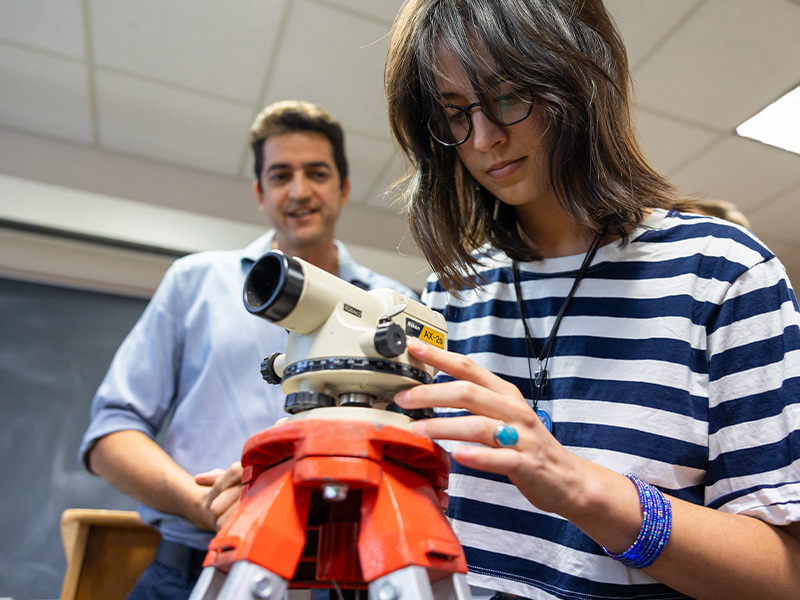
Classical studies is interdisciplinary: It takes in literature, art, architecture, philosophy, archaeology, and military, political, and social history. It thus provides students with an accessible model for thinking about how whole societies work.
Study Classics, and you will learn how an oration was constructed, how the social class of speaker and audience affected their ideas, and the philosophical and cultural sources of those ideas. You will see the look of the public spaces where the speech was delivered, read the kind of poetry orators read when they went home, and learn the relation of that poetry to the issues of its day.
Study Classics, and you will learn to have a totalizing historical imagination. A major or minor in Classics contextualizes and enriches fields of study within and beyond the humanities.
Why learn Greek and Latin?
Much can be learned from the texts of the ancient Greek and Roman worlds in translation. More still can be gained from reading them in Greek and Latin. Even short exposure to these languages provides powerful tools for analyzing the original texts and understanding the nature of language itself.
With advanced study, students enjoy unmediated contact with the writers of Greco-Roman antiquity. Study Greek and Latin, and your appreciation of a phrase in a letter of St. Paul, of an effect in a passage of Vergil, of the structure of argument of Cicero, or of an important nuance in a dialogue of Plato will be an everyday experience.
Why Classics at ND?
Classics at Notre Dame offers an unparalleled educational opportunity. All of our language classes and many of our culture classes are small. Faculty can give students a degree of individual attention impossible in larger programs. Advanced courses have abundant opportunities for discussion, independent work, and collaborative projects.
Take a Classics course, and the professor will know your name, your skills, and your interests when you need a letter of recommendation. The Department of Classics offers opportunities and support for travel, internships and study abroad, and in-depth advising for coordinating interests with program requirements.
Notre Dame’s Program in Arabic and Middle Eastern Studies is also housed in the Department of Classics.
Again, welcome! Please contact us with your questions.