College of Arts and Letters
To enjoy an unparalleled educational opportunity:
ἁδόντα δ' εἴη με τοῖς ἀγαθοῖς ὁμιλεῖν
May it be mine to be among the good and please them.
—Pindar, Pythian 2.96
Classics is where students study the history and languages of the ancient Mediterranean world, the birthplace of Western culture. They take Greek or Latin language courses, or classical civilization courses that require no language work.
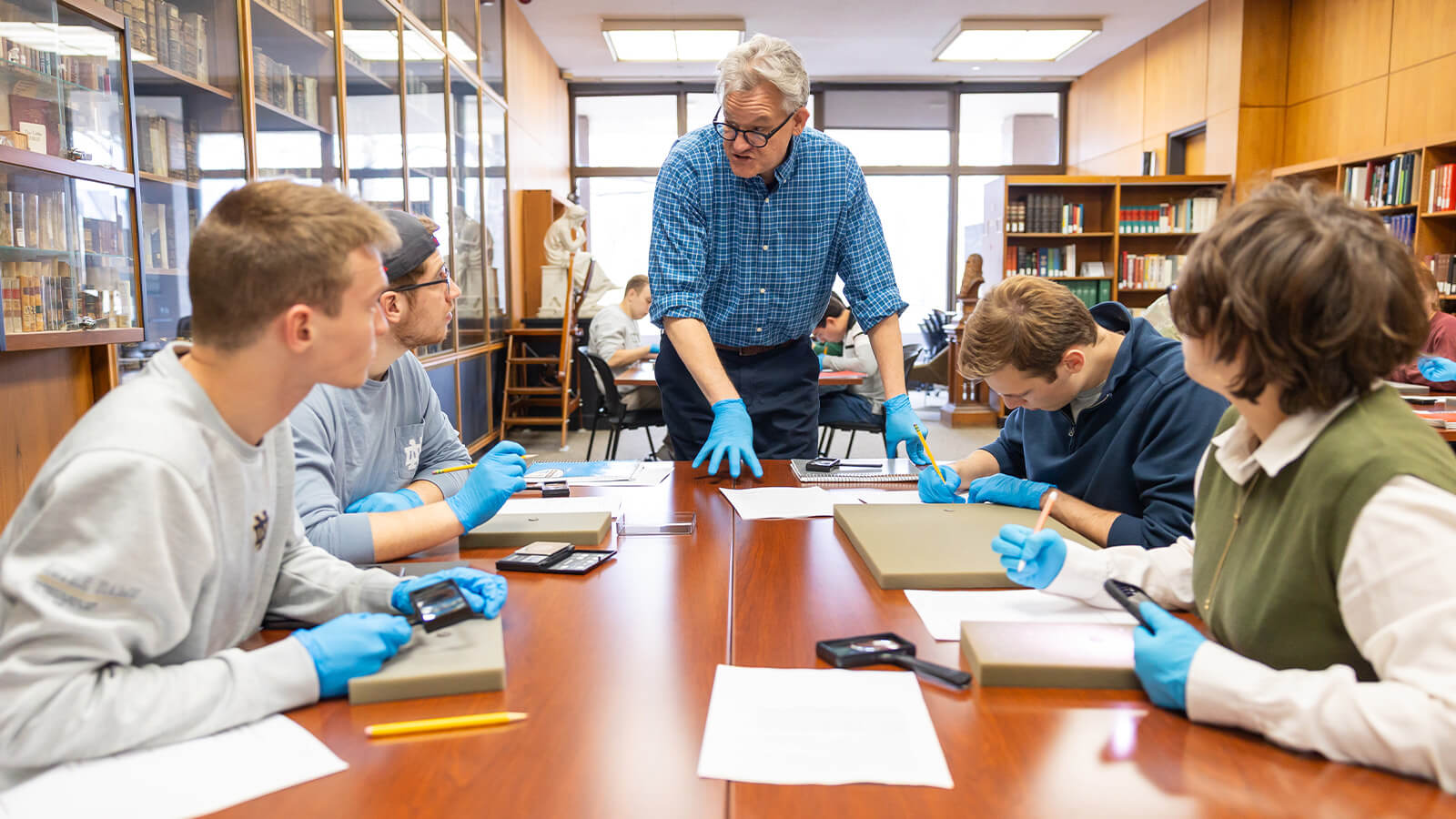
Advanced courses have abundant opportunities for discussion, independent work, and collaborative projects. Take a Classics course, and the professor will know your name, your abilities, and your character when you need a letter of recommendation.
As a capstone experience, students can explore study abroad options and fully-funded summer internships.
Our students receive the finest training available in the humanities as they study the philosophical and religious traditions that form the foundation of Western society and Roman Catholicism.
Opting for a Classics major might be one of the most strategic decisions you can make for your future. This isn't just about ancient history; it's a proven pathway to modern success. Students who delve into Classics consistently outperform their peers in a variety of competitive fields, from achieving higher acceptance rates into medical and law schools to scoring exceptionally well on standardized tests like the GRE. The discipline cultivates unparalleled skills in communication, analysis, and critical thinking, equipping you with an intellectual toolkit that is highly sought after across all industries. By studying the ancient world, you are in fact mastering the tools to thrive in the modern one.
“Ultimately, though, Classics majors get on well in life because they develop intellectual rigor, communication skills, analytical skills, the ability to handle complex information, and, above all, a breadth of view which few other disciplines can provide,” according to The Princeton Review.
Here are several testimonials about the joy and success that a Classics degree brings:
Contact Mary McNulty, Director of Undergraduate Studies
mmcnulty@nd.edu